Showing posts with label childhood obesity. Show all posts

Sunday, January 22, 2012

This makes the Georgia campaign even more manipulative


According to a story today in the Chattanooga Times Free Press, the heavy children shown in the state of Georgia's shaming, shameful Strong4Life campaign are child actors hired to pretend they have hypertension, no friends, and other negative qualities the ads associate with childhood obesity.

Because . . . they couldn't find any fat children with those conditions who were willing to model for their ads?

Maybe. Maybe not. Here I was worrying about how starring in an ad like this would affect a child like "Jaden" or "Maritza." It turns out there is no "Maritza," or rather, "Maritza" is actually a healthy 11-year-old girl named Chloe who does not have hypertension, or any major health issues.

So it turns out that not only is this so-called public health campaign manipulative and shaming, it's also a big lie. A big FAT lie.

Stop lying, Georgia. Really.

Friday, January 06, 2012

What's wrong with Georgia's childhood obesity campaign


My Aunt Selma was a fat teenager. Like most fat kids, she was deeply ashamed of her body. She tried many times to lose weight, and eventually hit on two strategies: cigarettes and bulimia. She died in excruciating pain, in large part from the abuse she’d heaped on her body for many years. But she died—and lived—thin.

I think about Selma every time I hear about yet another new initiative to fight childhood obesity. The latest is Georgia’s “Strong 4 Life” campaign, which features black-and-white images and video clips of children talking about being fat. Several of the kids say they don’t like to go to school because they get picked on. One asks his mother dramatically, “Mom, why am I fat?”

The answer is implicit in the advice found on the campaign’s website: Eat less junk food and more fresh fruits and vegetables. Be physically active. Limit screen time. All great ideas, except that doing these things won’t necessarily make kids thinner. Over the last decade, dozens of school programs have used nutrition education, junk food bans, and farm-to-school projects to try to slim schoolkids. None have worked. They’re positive programs that support kids’ health. But they’re considered failures because they don’t reduce weight.

Like virtually every other effort to combat childhood obesity, the Georgia campaign suggests that obese kids and adults can get thin by making moderate lifestyle changes, a fact not borne out by research or experience. Rudolph Leibel, an obesity researcher at Columbia University, has demonstrated over and over how biology makes maintaining weight loss difficult to impossible for most people.

And like most such efforts, the Georgia campaign fails to take into account the connection between obesity and stress—specifically, the stress of being stigmatized over weight. When Jaden tells the camera he likes to play video games alone because other kids pick on him, the screen reads, “Being fat takes the fun out of being a kid.” The implication is clear: The problem is with Jaden. It is his fat, and the fact that he is fat, that make the other kids taunt him. The ad follows up with a taunt of its own: “Stop sugarcoating it, Georgia.”

Peter Muennig, M.D., of Columbia’s Mailman School of Public Health, researches the connections between weight and health. He believes stigma and weight bias are responsible for at least some, and possibly most, of the adverse health effects associated with obesity. In other words, it may not be weight itself that makes people sick, but rather the stress of being fat in a fatphobic society. Kortni Jones, a physician’s assistant in Michigan, looked at the relationship between weight stigma and health care in her master’s thesis, and found that messages of overt stigmatization from health-care providers translate to worse health care for people who are obese. Rebecca Puhl of Yale’s Rudd Center for Food Policy & Obesity has come to similar conclusions after doing a series of studies on how stigma affects obesity.

Clearly, shaming people about weight is not an effective public health strategy. So why are we still doing it? Why, for instance, is there nothing on the Georgia campaign website about educating kids not to tease each other over weight? Why do people who would never dream of telling a joke about blacks or Jews tell fat jokes without flinching?

Efforts like this one emphasize the idea that weight loss is a matter of personal responsibility, and they demonize fat children and teens in the name of helping them. How do kids feel when they see kids who look like them being targeted as not OK? They already know it’s bad to be fat; in one recent study, children as young as three showed a strong preference for thinness over fat, and made comments like “I hate her because she has a fat stomach” and “She’s fat and ugly.”

I have a better idea for a public health campaign, one that’s supported by research and experience. Let’s take the best ideas from campaigns like this one and frame them around health instead of weight. Instead of trying to make fat kids thin, the goal would be making all kids healthier.

We don’t fully understand why some people become obese and others don’t. But we do know that all of us, no matter how old, no matter how fat, benefit from eating well and getting exercise. We know that friends are good for our health and that bullying hurts the bully as well as the victim. We know that shame drives people like my Aunt Selma to self-destructive behaviors. In my campaign, the word obesity would never be mentioned. But the words health, respect, and compassion would be on every page.

Thursday, January 06, 2011

Obesity and eating disorders: they're connected


When I talk with doctors about eating disorders, I often end my presentation with a caveat to them, to be aware of how the current
"war on childhood obesity" can trigger eating disorders in those who are vulnerable. That's the point in the program where I often see one or two audience members sit back and cross their arms in a way that telegraphs plainly their disbelief and even disgust. (I've had people walk out at that point, too.)

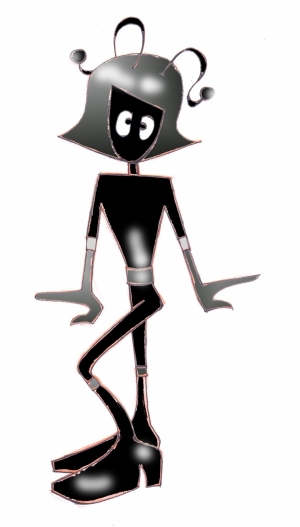
If you think that's pushing things a bit too far, I'd like to call your attention to just one of the many "anti-childhood-obesity" websites I've run across lately. This one is particularly egregious, as it offers up cartoon characters that are both offensive and poorly illustrated (not to mention an obnoxious soundtrack, which you can turn off at the lower lefthand corner of the screen). The "cast" of characters here includes O-Bee-Sity, described herein as "s "the supreme fat lord of the universe" who can "turn kids into globs of fat with one slimy touch"; Phat Cells, which "have the ability to multiply and wreak havoc on the human body"; and--rather unbelievably--Anna-Rexia, who apparently hails from the planet Bulimia (don't these folks get the difference?) and both "infects little girls with eating disorders" and "despises" the rest of the cast (shown above).

Aside from the bad art and wild overuse of copyright symbols, there's some just plain bad information here. The site claims that childhood obesity causes not just diabetes, high blood pressure, and heart disease (all of which is still up for discussion, especially given the fact that we don't know whether obesity causes these ailments or whether the ailments themselves contribute to obesity), but also cancer, liver disease, asthma, and eating disorders.

Hello? Considering the fact that one of the "characters" here is "Dr. Smart," billed as the "secretary of health and fitness at the Pentagon," I'd like to think that someone was actually doing some research and not just spewing ill-founded and unsupported opinions as facts. Sadly, this is not the case. And I'd have to say that this is the norm for sites like this, which remind me of other zealous-but-ignorant campaigns.

In fact, as readers of this blog probably know, it's not obesity that causes eating disorders, but rather a combination of factors, mainly genetics and dieting. It's the war on childhood obesity--and on adult obesity--that's responsible for triggering anorexia, bulimia, and other eating disorders, not the condition of obesity itself. And the prejudice and stigma directed against the obese is likely responsible for many of the negative health outcomes we associate with weight.

Any way you look at it, websites like this one are not just ignorant or misguided; they're dangerous. And that's why I'll keep sounding the alarm when I talk to doctors. They need to know the consequences of their crusades.

Tuesday, July 13, 2010

Michelle Obama: Starting to get it?


Maybe so, if this story from the Christian Science Monitor is to be believed.

The First Lady goes on record saying she "tries to stay away from discussions about weight with her daughters," focusing instead on health. Though I notice she's still willing to talk about weight with the rest of our daughters. And sons.

Well, change comes slowly. Good start, Mrs. Obama! I hope you'll keep listening as well as talking. And if you've got another place at the table for your September summit on childhood obesity, please count me in. . . .


PHOTO CREDIT: AP PHOTO/ED ZURGA

Tuesday, June 01, 2010

Check the Huffington Post . . .

for my response to the White House Task Force on Childhood Obesity.

Add your comments, please. I'm sure there will be plenty of the wrong kind up shortly.

Friday, January 29, 2010

NAAFA takes on Michelle Obama's crusade against childhood obesity

I wouldn't normally repost a press release. But this one from the National Association to Advance Fat Acceptance is so well-researched and concisely effective that I can't resist.

Repeat after me, everyone: Shame is not a health-care strategy.

Enjoy.

NAAFA Challenges the First Lady

For Immediate Release
January 29, 2010

Oakland, CA – First Lady Michele Obama has recently announced her intention to focus on childhood obesity prevention. NAAFA encourages the First Lady to consider all the research before taking action and supporting any program that may do more harm than good.

Mrs. Obama, please explore and consider the following:

• When important figures such as parents, teachers and peers in children's social environment endorse a preference for thinness and place an importance on weight control, this can contribute to body dissatisfaction, dieting, low self-esteem and weight bias among children and adolescents (Davison & Birch, 2001; Davison & Birch, 2004; Dohnt & Tiggemann, 2006; Smolak, Levine, & Schermer, 1999).

• The stigmatization of large children has increased by 40% over the last 30 years (Latner & Stunkard, 2003).

• Many drugs presently being prescribed to children cause weight gain. There was a 40 fold increase in bi-polar diagnoses in children between 1994 and 2003. 90.6% of youth received a psychotropic medication during bipolar disorder visits. For many, mood stabilizers, antipsychotics, and antidepressants were also prescribed. (Arch Gen Psychiatr,. 2007)

• Prescribing dieting is, in effect, prescribing weight cycling, and many people will be fatter in the long run (Mann, 2007).

• Weight-control practices among young people reliably predict greater weight gain, regardless of baseline weight, than that of adolescents who do not engage in such practices (Neumark-Sztainer et al., 2006).

• Based on results from a population-based, longitudinal study with 2,500 teens, Neumark-Sztainer and colleagues at the University of Minnesota (2006) concluded that to prevent obesity and eating disorders, the focus needs to be on health much more than weight. The more weight per se is talked about, the more likely teens are to adopt dangerous dieting behaviors.

• A 2006 study from UCLA suggests our media and cultural obsession with achieving a certain weight does little or no good and may actually undermine motivation to adopt exercise and other healthy lifestyle habits.

• The National Center for Health Statistics, part of the Centers for Disease Control and Prevention indicated in 2008 that childhood obesity has leveled off.

NAAFA urges the First Lady to:

• Partner with us and our many resources in the scientific and healthcare communities to examine this issue. Fat children are already the targets of merciless bullying. NAAFA urges Mrs. Obama not to support any programs that would create a pervasive bias against fat children.

• Consider Guidelines for Childhood Obesity Prevention Programs found at: http://www.aedweb.org/media/Guidelines.cfm Childhood School Plans at http://www.healthyweight.net/schools.htm and Guidelines for Children at http://www.healthyweight.net/children.htm

• Support the Health at Every Size (HAES) tenets which state that healthy habits are good for EVERYONE, no matter what their size. Eat healthy, nutritious foods and enjoy occasional treats. Pay attention to your natural hunger and satiety cues. Move your body in ways that feel good rather than exercise focused solely on weight loss.

"Obesity has a strong genetic component that is expressed in environments that foster sedentary activity and eating an energy dense diet", stated Joanne Ikeda, Nutritionist Emeritus, University of California Berkeley, "Therefore, we encourage First Lady Michelle Obama to promote environmental changes in school settings that support enjoyable physical activity and consumption of a wide variety of nutritious, appetizing foods."

This issue is about the critical need to create environments in which children and adolescents do not feel shame or guilt about their bodies but, rather, are motivated to enjoy healthful eating and active living habits regardless of their body size or shape.

Founded in 1969, NAAFA is a non-profit human rights organization dedicated to improving the quality of life for fat people. NAAFA works to eliminate discrimination based on body size and provide fat people with the tools for self-empowerment through public education, advocacy, and member support.

On the web:
http://www.naafa.org

Wednesday, August 19, 2009

Is Your Child One of the 12 Percent?

One of the things you hear a lot these days--at least if you spend any time talking to doctors about eating disorders--is that they affect a relatively small number of kids. Prevalence rates for anorexia are usually quoted as .5 to 1 percent, and 3 to 6 percent for bulimia. (Binge eating disorder is a newer diagnosis; I've heard 3 percent for BED but don't know if it's accurate.) Which somehow makes them less worthy of attention, concern, and research money than, say, childhood obesity, which as we all know is public healthy enemy #1. (That's sarcasm, y'all.)

But a new study out of University of Texas at Austin shows that fully 12 percent of all adolescents experience some form of eating disorder. That's 12 out of 100. Which may not sound like much.

But consider that 1 out of 15,000 kids gets cancer of some kind, and think about the attention and research and money devoted to understanding and treating childhood cancers. Then think again about the number: 12 percent.

It sounds a lot bigger now.

One of the pervasive problems in treating eating disorders is a lack of effective treatments. We need more research, which needs we need more research dollars. One reason we don't get those dollars is that families are often reluctant to acknowledge that their child has an eating disorder because of the stigma associated with these illnesses.

Cancer used to carry a lot of stigma, too. As a culture we've mostly gotten over that. How about we start challenging the stereotypes around eating disorders? Parents could be amazing advocates, if only we were willing to stand up and say, "Yes, my child is one of the 12 percent--now what are we going to do about it?"

How about it?

Saturday, August 30, 2008

Suffer the little children


The latest "SmartSummary" from our much-hated health insurer arrived in the mail yesterday. I'm sure one reason our premiums are so high is that they periodically generate an 8-page booklet for each member of the family, replete with all sorts of useless information.

The piece that really burned my boat was this page, which arrived only with my 8th-grader's package. Let's take a minute to deconstruct this noxious document, shall we?

First, take note of the underlying threatening tone of the introduction. In case you can't read the scan, here it is:

Before you go back to school, take a minute to think about how sitting in class means you'll need more time for physical activity outside of school to stay healthy. Use this Body Mass Index (BMI) to figure out if you're in a healthy weight range, then you can see how to burn more calories and eat healthier in a way that fits your lifestyle.

Ths little gem offends on a variety of criteria, starting with the grammatical and syntactical errors (comma splice, word repetition, and excess verbiage). It then moves on to emotinal blackmail. Sitting in class leads to not staying healthy, unless you add more physical activity. There's a not-so-implicit threat here: You've got to burn off every minute you spend sitting on your tush and studying, kids.

For a kid like my older daughter, who likes to play by the rules and do everything "right," this notion could be enough to trigger a lifelong eating disorder, not to mention a fear of school and studying. And who's to say that each kid isn't already plenty physically active? The summary assumes that kids aren't getting enough exercise. Maybe they are, maybe they aren't. But this piece of paper sure as hell doesn't know.

Moving down the page, notice the list titled "Burn the Calories." One of the most egregious ideas behind the whole "wellness" movement is the idea that you can quantify and generalize in this way. Whereas anyone with a whiff of education on the subject knows that this depends not only on the size and age of the person in question but on his/her particular metabolism. Yet this paper confidently announces that a half hour of soccer burns 238 calories. Bullshit.

The eating disorder triggers continue on the bottom left of the page, where my daughter is told that 1 small cheeseburger would take 29 minutes of jogging to "burn off." There's a lot wrong here, starting with the idea that every bite you take must be "burned off." That's like saying every gallon gas you put into your car must be used immediately. Then there's the implicit idea that the foods listed here--plain "donut" (sic), cheeseburger, piece of pie, fried chicken sandwich--are bad for you and must be routed from your system asap.

Finally there's the ubiquitous BMI calculator and BMI chart. Once more with feeling: The idea of "ranges" is beside the point, especially for growing children. What's healthy for one child at one point in her life will not be the same as what's healthy for another child, or for the same child six months later.

I call this Bullshit 101. And I'm ever so glad my hard-earned money will no longer be going toward creating such appalling crap.

Friday, May 23, 2008

An open letter to parents

Dear Parents,

I know it's hard to raise a child in this day and age for all kinds of reasons. And I know that one of those reasons is all the messages you get about your child and weight.

I know that parents often get shamed, these days, if their child's weight is too high (or too low). That there's enormous pressure for kids to slim down and look a certain way. To fit the current cultural norms around appearance and weight.

But for god's sake, I beg you, don't send your child off to a place like this. If you've ever been tempted to send your child off to fat camp, read this article in the Washington Post. Read about a "camp" where growing teenagerss are forced to eat such a low-fat low-everything diet that eight of them developed gallbladder disease in the last year.* Where six of them needed gallbladder surgery. Where kids routinely douse their food with ketchup and mustard.** Where hungry teenagers drink 12 or 15 cans of diet soda a day, all of it laced with Splenda.*** Where the director of the whole place thinks it's OK if kids gorge on cake occasionally because they'll just throw it up again.**** Where kids are put into "solo" when they break the rules.

Most of all, what a place like this does is reinforce the idea to your child that s/he is not OK as s/he is. That she's acceptable only if she loses weight. That she's not lovable as she is.

And that's the very worst part of this whole trend. As parents, we're supposed to build our children up, not undermine them. We're supposed to be voices of reason in a sometimes crazy world.

So if your child doesn't fit today's paradigm for weight or attractiveness, love her anyway. Tell her she's beautiful and strong and lovable and smart. Teach her to love herself. That's the way to health and beauty. The other will lead her down a lifelong path of hating herself. And I can tell you from personal experience that that's not the way to health and beauty.


*Gallbladder disease can be caused by weight loss that's too fast.

** A classic sign of malnutrition/starvation. The volunteers in Ancel Keys' starvation study did the same. So did my daughter when she was anorexic.

***A friend of mine was temporarily blinded by Splenda. She leaned over a pot on the stove at just the wrong moment, and was blinded by the chlorine gas released from the Splenda-laced concoction. You definitely don't want your child drinking Splenda. Especially not 15 servings a day.

**** As my friend Jane says, hello bulimia.

Wednesday, May 21, 2008

Childhood obesity: the deconstruction

Over at the Rocky Mountain News, Paul Campos has posted a brilliant response to some of the hyped-up points made in the Washington Post's current (and ridiculously overblown) series on childhood obesity--and issued a challenge. A $10,000 challenge, to be exact, to the lead author of the 2005 study that predicts a two-to-five-year drop in life expectancy "unless aggressive action manages to reverse obesity rates."

Campos rebuts some of the war-on-childhood-obesity's usual points with elegance and clarity. For instance, to put some of the current hyperbole in context, he points out, "Ever since public health records began to be compiled in America in the mid-19th century, the following statement has always been true: Today's children are both larger and healthier, on average, than those of a generation ago."

One of the most commonly repeated predictions by fervent generals in the war on childhood obesity is that because children are fatter today, their lives will be shorter. What could possibly strike more fear into a parent's heart? I think this prediction is at the heart of the current hype, and clearly Campos agrees, because his challenge to the author of the 2005 study involves a more thorough examination of the data:

If, at any decennial census going forward, obesity rates have risen or remained the same, and life expectancy in America has declined, I'll pay [the author] $10,000. If we don't get any thinner but life expectancy has risen, he'll pay me the same sum.

I look forward to Round 2.

Monday, February 25, 2008

A little exercise for National Eeating Disorders Awareness Week

As I was reading this article on the "global obesity epidemic," I couldn't help thinking that it was in fact a blueprint for creating an eating disorder.

Let's take a closer look.

Wherever we read the words weight gain let's substitute the words weight loss. Wherever we read the word obesity, let's substitute the word anorexia. Instead of weight maintenance, let's go with weight loss. For prevent we'll say cause. For less, more.

Now let's look at the section of the article that talks about strategies for weight maintenance--I mean weight loss.

[The researcher] will argue that small daily changes, say using the stairs, are enough to cause incremental weight loss that can lead to anorexia. [The researcher], however, will make the case that much larger life-style changes - say exercising 60 to 90 minutes a day - are needed to cause weight loss.

"Our data from the National Weight Control Registry suggests strategies associated with successful weight loss include high levels of physical activity and conscious control of eating habits," said [the researcher]. "Dieters who remain diligent about diet and exercise are much more likely to gain weight back."

Examples of conscious control include frequent weighing, following a consistent dietary regimen across the weekdays and weekends, and taking fast action if small weight gains are observed. . . .


Actually you don't even have to change a lot of the language here, because the basic idea in maintaining weight loss is the same in inspiring weight loss. You've got to make changes in your life--in other words, you've got to behave in eating-disordered ways--in order to lose weight.

Frequent weighing, rigid eating behaviors, obsessive attention to dietary details. Yup. Sounds like an eating disorder to me.

And since this is, after all, a week when we are supposed to become more aware of eating disorders, I encourage you to go out and eat something and then not write it down. Have a second helping. Don't weigh yourself. Eat what you feel like. Stop when you're done.

In other words, eat normally--if we can even remember what that means.

Thursday, February 07, 2008

It is too genetic

Check out this new study, just published in the American Journal of Clinical Nutrition, in which British researchers looked at more than 5,000 pairs of identical twins and determined that

genes account for about three-quarters of the differences in a child's waistline and weight.

Here's the quote of the day:

"Contrary to the widespread assumption that family environment is the key factor in determining weight gain, we found this was not the case," said Jane Wardle, director of Cancer Research UK's Health Behavior Centre, who led the study.

So what does this mean? It means that maybe we can stop obsessing over children's BMI and focus instead on their OH--their overall health. It means that families can go back to making sure their children are healthy without all the woohoohoo about them being fat. Most important, it means that maybe, just maybe, we can start ditching some of the blame and shame about fat and pay attention to what really matters.

As the Dressing Room Project folks like to say, Worry about the size of your heart, not the size of your body. Amen, sisters.

Here's a PDF of the entire study. Have fun with it.